

The Shallow Cauldron: Why “Tranquil” Mountains Are Often the Most Dangerous

To the casual hiker, the snow-capped peaks of the Cascade Range—from Mount Rainier to Mount Baker—look like eternal, immovable monuments of stone. But for geologists, these “tranquil” vistas are a deceptive mask. New research is revealing that the engine driving these giants is much closer to the surface than we previously dared to imagine.
A groundbreaking study by Penny E. Wieser at the University of Cambridge has just reshaped our understanding of the “plumbing” systems beneath volcanic arcs. By synthesizing depth constraints across the entire Cascade volcanic arc, the research reveals a startling consistency: the magma isn’t just hiding deep in the Earth’s mantle; it is “boiling” in the upper crust.
The Shallow Storage Paradigm
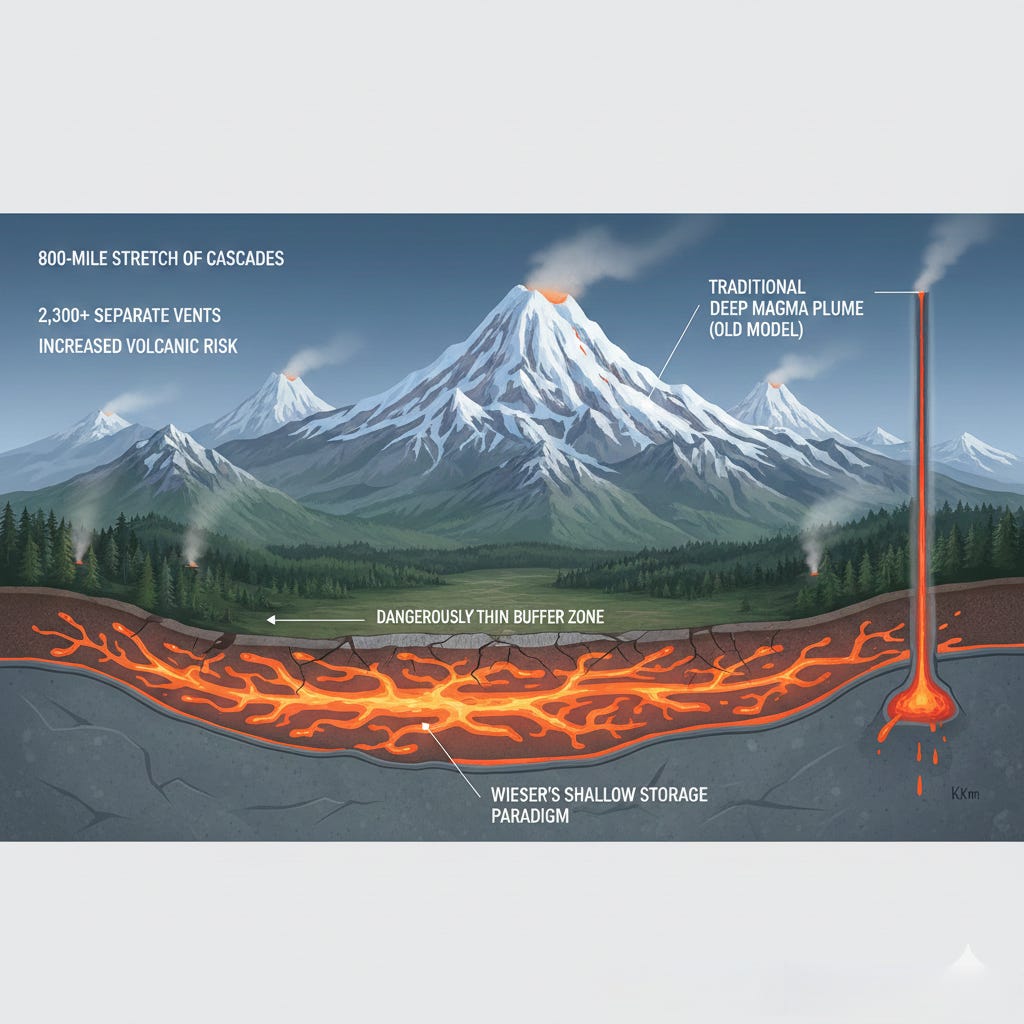
Traditionally, volcanic models often depicted magma rising from great depths in a steady, predictable vertical column. However, Wieser’s work demonstrates that across the 800-mile stretch of the Cascades—encompassing over 2,300 separate vents—molten rock tends to cluster in a remarkably shallow zone.
This shallow positioning is more than just a geological curiosity; it is a fundamental shift in how we assess volcanic risk. When magma is stored in the upper crust, the “buffer zone” between the reservoir and the surface is dangerously thin.
When Gas Breaks Free
The study highlights a critical physical process: volatile exsolution. Deep underground, the immense pressure of the Earth keeps volcanic gases (like water vapor and CO2) dissolved within the molten rock. But as magma sits in these shallow upper-crust reservoirs, even slight shifts in pressure can cause these gases to “bubble out” rapidly.
Think of it like opening a shaken soda bottle. In a shallow reservoir:
Expansion is rapid: Gas bubbles form and expand with violent speed.
The path is short: Because the magma is already close to the surface, the time between a “gas event” and an actual eruption is significantly compressed.
Energy is focused: Expanding gases can shatter molten rock into ash and pyroclastic fragments, turning a slow-moving lava flow into a catastrophic explosive event.
A Consistent Architecture of Risk
What makes this study particularly vital for the geological community is the discovery of regional consistency. Despite the fact that individual volcanoes like Mount St. Helens and Mount Hood have vastly different eruptive histories and sizes, they share a similar “shallow-storage” blueprint.
This suggests that the tectonic forces of the Cascadia Subduction Zone—where the Juan de Fuca plate slides beneath North America—create a uniform environment for magma to pool and mature.
Why This Matters for Monitoring
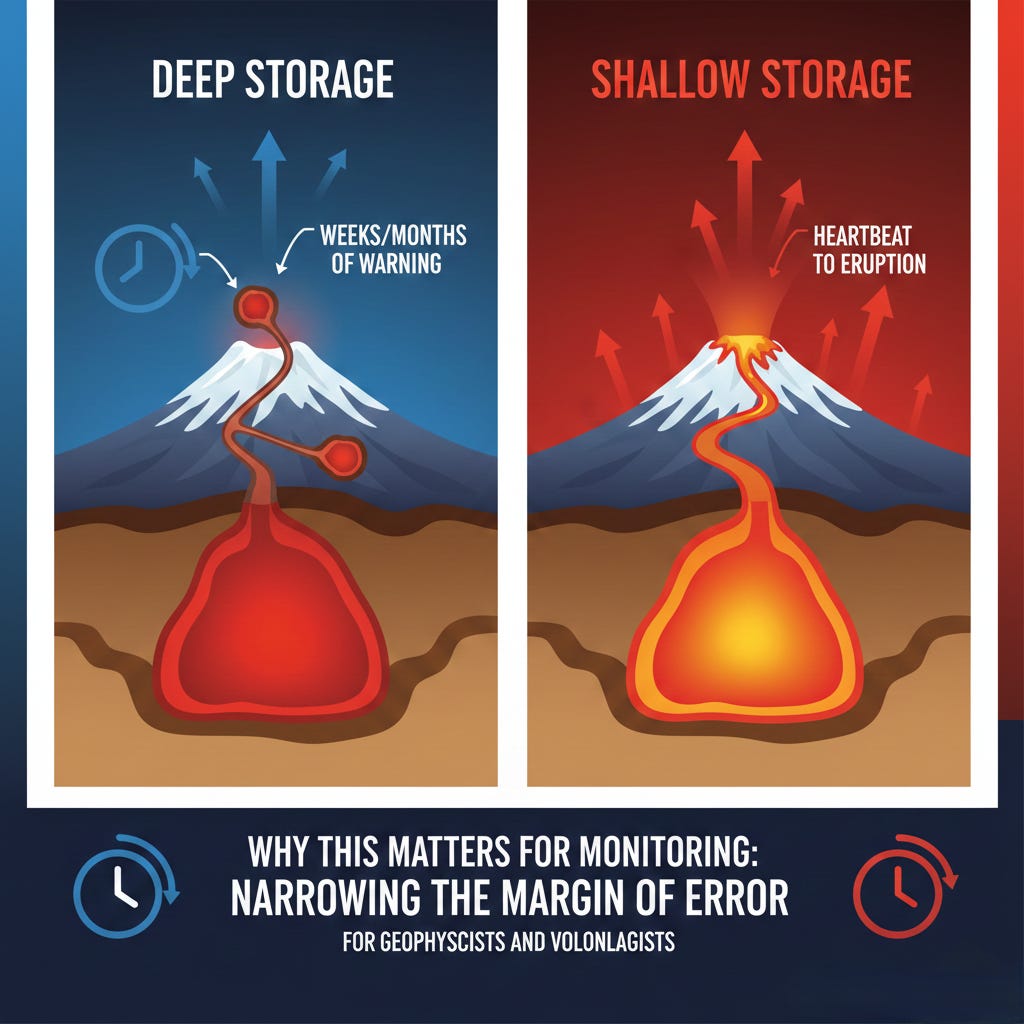
For geophysicists and volcanologists, this narrows the margin of error. If magma is stored deep, we might see weeks or months of “warning” as it migrates upward. In a shallow-storage system, the transition from “unrest” to “eruption” can happen in a heartbeat.
The study serves as a powerful reminder that the Earth’s surface is merely a thin crust over a dynamic, high-pressure system. As cities like Seattle, Portland, and Vancouver continue to grow in the shadow of these peaks, understanding the “shallow boiling” beneath our feet isn’t just academic—it’s a matter of public safety.
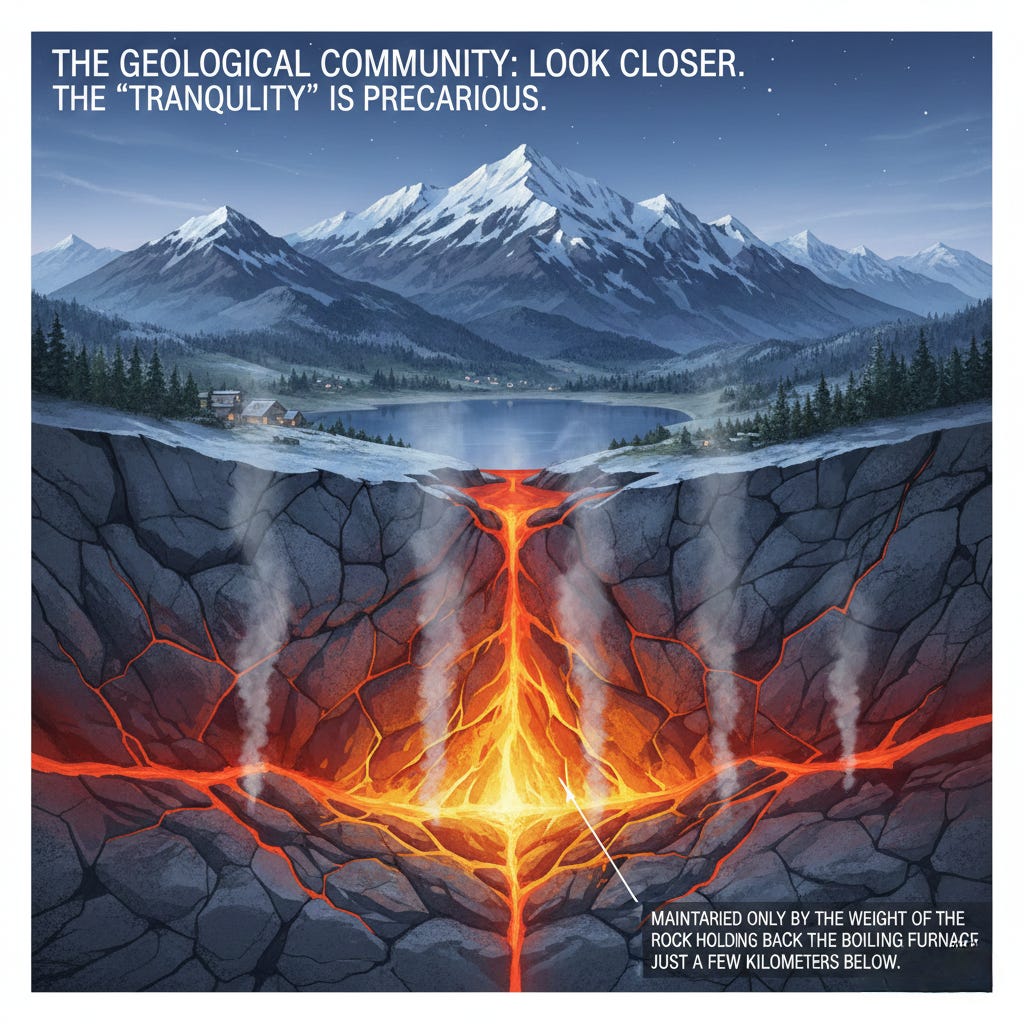
The takeaway for the geological community? We need to look closer at the upper crust. The “tranquility” of our mountains is a precarious balance, maintained only by the weight of the rock holding back the boiling furnace just a few kilometers below.
For more deep-dives into the latest tectonic research and volcanic monitoring, stay tuned to my substack.