

Isostasy: Why Continents Float and Mountains Have Roots
Continents Float Like Icebergs—And Mountains Have Secret Roots

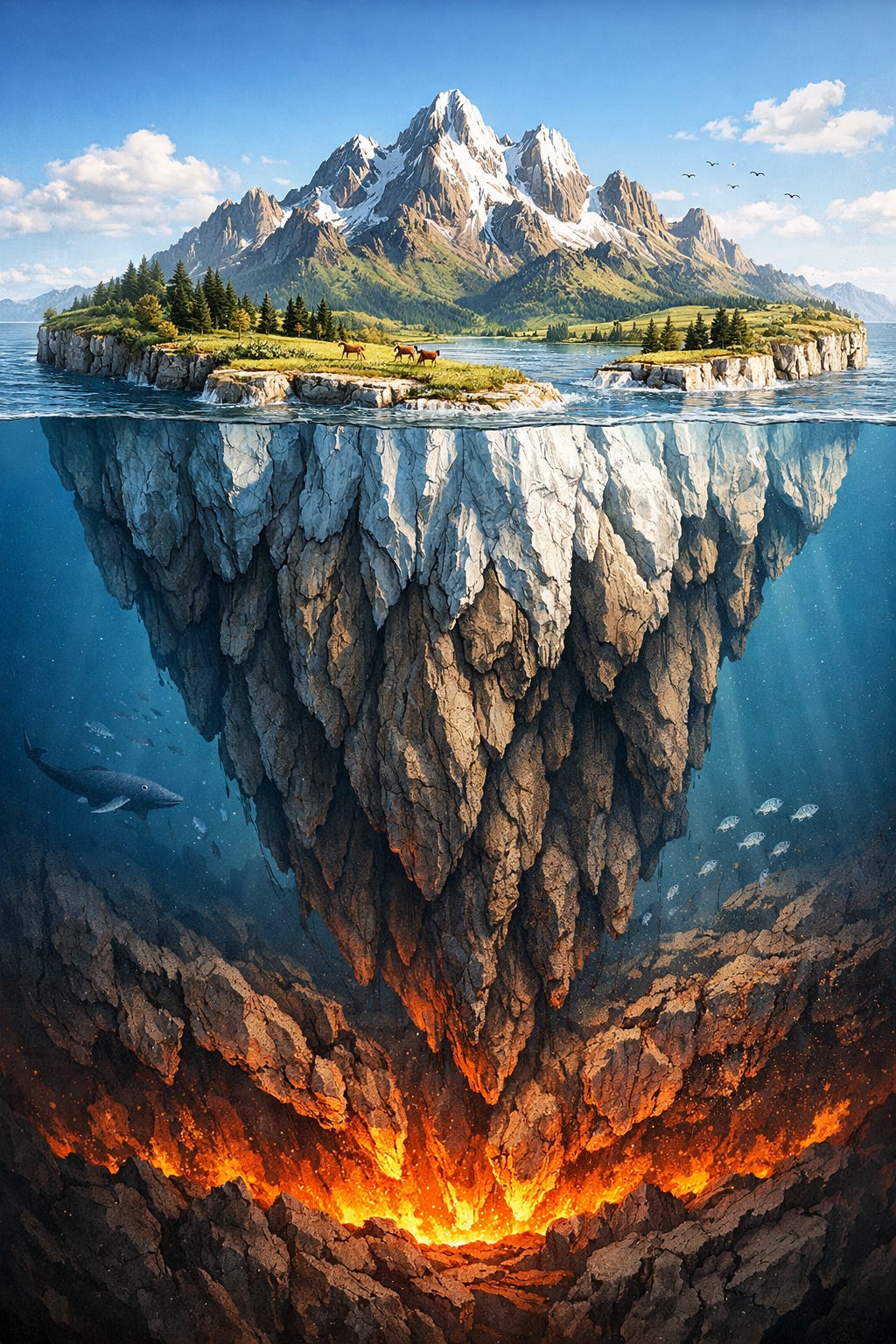
If you look at a map of Earth, continents seem fixed and immovable. Mountain ranges appear like solid wrinkles frozen into the planet’s crust. But beneath the surface, our planet behaves in a surprisingly fluid way.
In fact, continents float.
Not on water—but on a slowly flowing layer of rock deep within the Earth. And the tallest mountains we see above ground are only part of the story. Hidden below them are enormous “roots” that plunge deep into the planet.
This concept is known as Isostasy, and it reveals one of the most elegant balancing acts in planetary physics.
Earth’s Crust Floats Like Icebergs
To understand isostasy, imagine a group of icebergs floating in the ocean.
The larger an iceberg is above the water, the deeper it extends below the surface. The visible portion is only a fraction of its true size.
Earth’s crust behaves similarly.
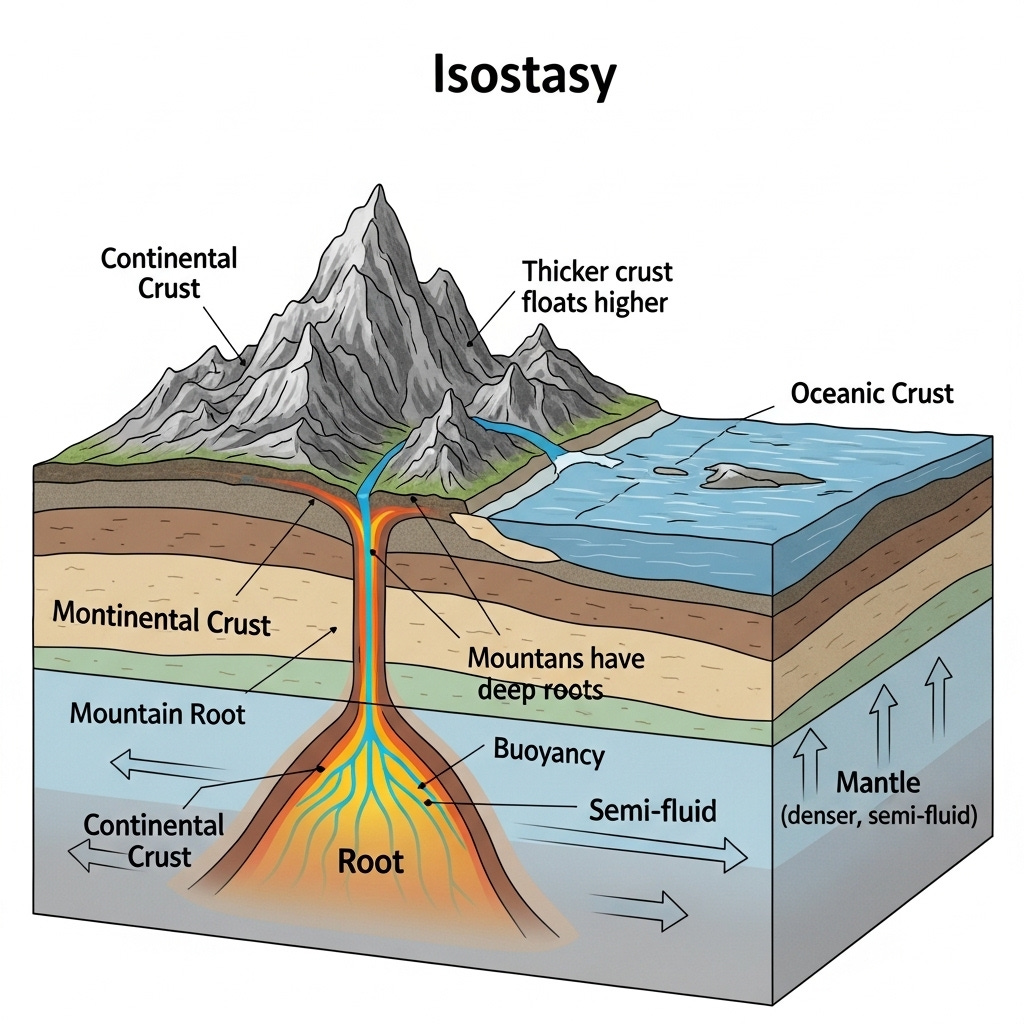
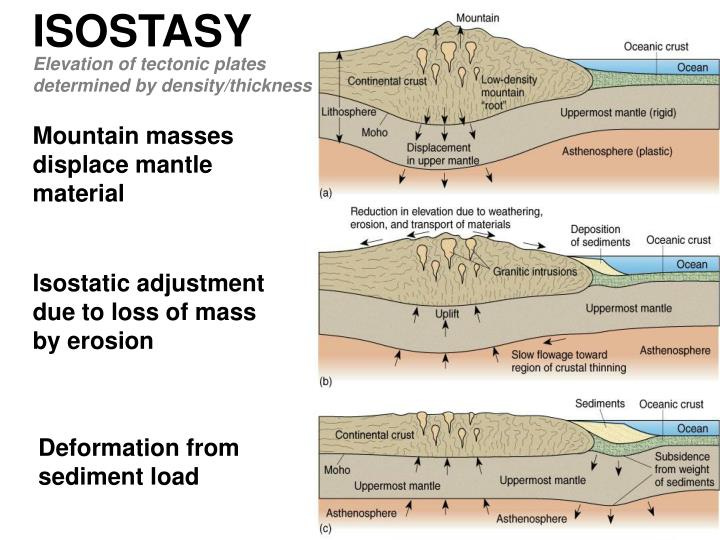
The rigid outer shell of our planet—called the Lithosphere—rests on top of a softer, slowly deforming layer known as the Asthenosphere.
Although both layers are made of rock, the asthenosphere behaves like an extremely slow-moving fluid over geological time. This allows the lithosphere to float and adjust its position depending on its weight and thickness.
This balance between gravity and buoyancy is what scientists call isostatic equilibrium.
Why Mountains Have “Roots”
When massive mountain ranges form, they don’t just push upward. They also push downward.
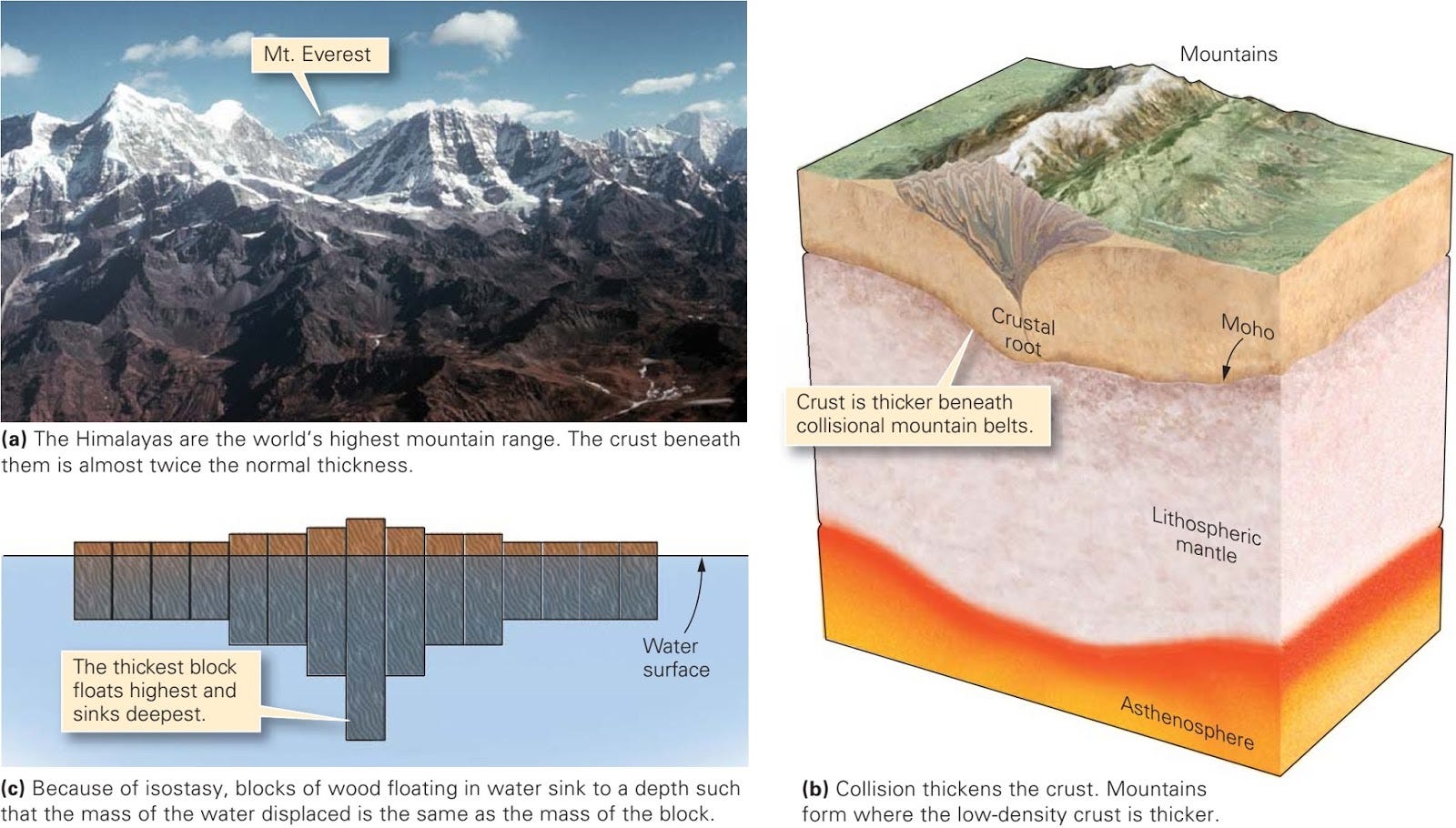
Take the towering Himalayas, Earth’s highest mountains. Their peaks reach over 8,000 meters above sea level, but beneath them lies an enormous hidden structure.
Seismic studies show that the crust below the Himalayas extends 60–70 kilometers deep, far thicker than the average continental crust.
These deep extensions are called mountain roots.
Just like an iceberg, the greater the height above the surface, the deeper the root below it.
This structure helps stabilize the mountains by distributing their mass into the mantle.
How Scientists Discovered Isostasy
The idea of isostasy emerged in the 19th century during surveys of India.
Surveyors working under the Great Trigonometrical Survey of India noticed something strange while measuring gravity near the Himalayas.
Based on the mountains’ enormous mass, gravity readings should have been stronger than expected. But the measurements showed less gravitational pull than predicted.
The explanation?
Much of the mountain’s mass was missing below the surface, replaced by lower-density crust extending downward into the mantle.
The mountains were essentially floating higher because of their deep roots.
Continents Rise After Ice Melts
Isostasy isn’t just theoretical—it’s happening right now.
During the last Ice Age, massive ice sheets covered much of North America and northern Europe. In places, the ice was over 3 kilometers thick.
The weight of that ice pushed the crust downward into the mantle.
When the ice melted about 10,000 years ago, the land began slowly rebounding upward in a process called post-glacial rebound.
Regions like Scandinavia and parts of Canada are still rising today, by as much as 1 centimeter per year in some places.
The Earth is literally springing back after being compressed by ancient ice.
Mountains Erode… and Rise Again
Another fascinating consequence of isostasy involves erosion.
Wind, rivers, and glaciers constantly grind mountains down, carrying their rock toward the oceans.
But as weight is removed from the mountains, the crust beneath them rebounds upward, lifting the landscape.
This means erosion can paradoxically help maintain mountain elevation for millions of years.
Even as peaks are worn away, the crust slowly rises to compensate—like a ship rising higher as cargo is unloaded.
A Planet in Constant Balance
The principle of isostasy reveals something profound about Earth.
Our planet is not a rigid sphere of rock. Instead, it behaves more like a dynamic system constantly adjusting to changes in weight and pressure.
Mountains grow and sink. Continents rise after glaciers disappear. Crust shifts subtly to maintain gravitational balance.
What appears solid and permanent is actually part of a slow but continuous equilibrium.
Over millions of years, the Earth has always rebalanced itself.
The Hidden Half of Mountains
Next time you see a mountain range on the horizon, remember that you are only seeing part of it.
Far beneath the peaks lies an invisible structure reaching deep into the mantle—a vast root anchoring the mountain to the planet.
Just like icebergs drifting in the ocean, continents and mountains are quietly floating atop the slow currents of Earth’s interior.
And the deeper scientists look, the more they realize that the ground beneath our feet is part of a delicate planetary balancing act.
Thanks Adrian! Mountains have Roots?! Amazing. ⛰️