

First commercial Concorde flight

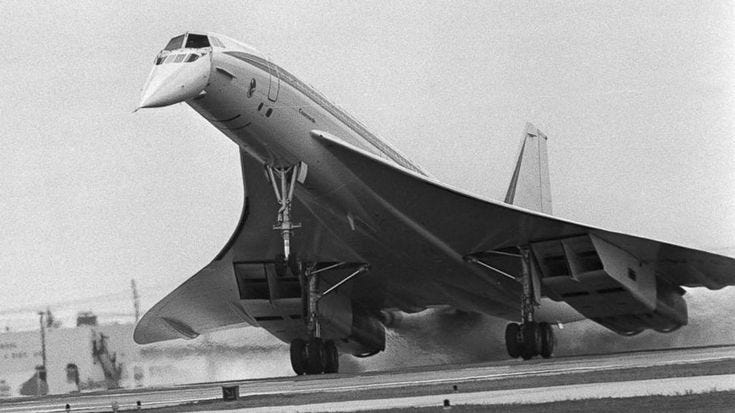
On January 21, 1976, aviation history reached a thrilling milestone as the Concorde, the world’s first supersonic commercial airliner, launched its inaugural scheduled passenger services. Generating a ‘sonic boom’ as it sliced through the atmosphere at more than twice the speed of sound, this delta-winged marvel—jointly developed and funded by the British and French governments—ushered in an era of ultra-fast travel that felt like science fiction come to life.
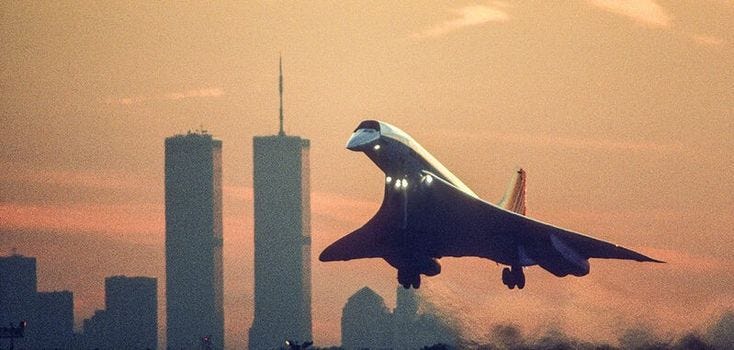
The Concorde was no ordinary jet. Born from a 1962 treaty between the UK and France (hence the name “Concorde,” meaning agreement in both languages), the project combined the expertise of British Aircraft Corporation and Aérospatiale. Powered by four Rolls-Royce/Snecma Olympus engines, it cruised at Mach 2.02(around 1,350 mph or 2,172 km/h) and flew at altitudes up to 60,000 feet—high enough for passengers to see the curvature of the Earth and experience a sky darkened to deep blue.
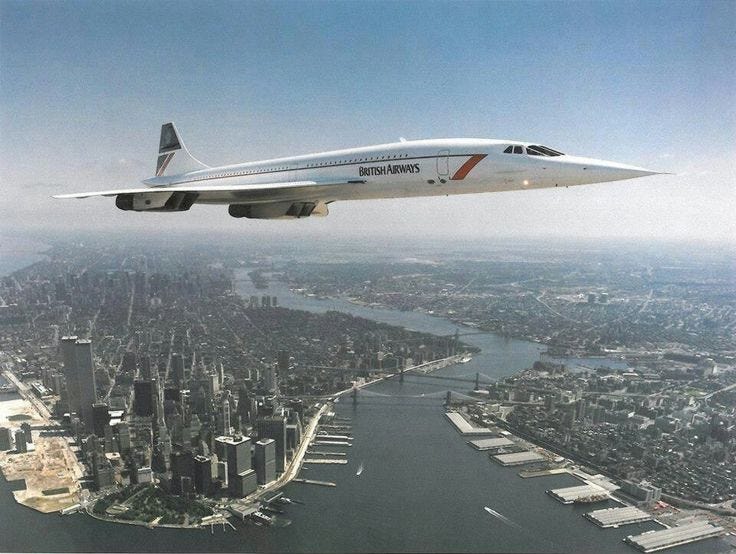
After years of prototypes, test flights (the first in March 1969), and overcoming political, environmental, and economic hurdles—including bans on supersonic flight over land due to sonic booms—the day finally arrived. At precisely 11:40 a.m. local time, two Concordes took off simultaneously in a choreographed spectacle broadcast live on television:
- British Airways’ Concorde **G-BOAA** departed from **London Heathrow Airport**, bound for **Bahrain** in the Persian Gulf (flight BA300).
- Air France’s Concorde **F-BVFA** lifted off from **Paris Charles de Gaulle Airport**, heading to Rio de Janeiro with a stop in Dakar, Senegal.
The synchronized departures symbolized the Franco-British partnership and the dawn of commercial supersonic travel. On board were fare-paying passengers—celebrities, business executives, and aviation enthusiasts—experiencing luxury at unprecedented speed. The cabins featured fine dining, champagne, and large windows offering stunning views, though the narrow fuselage and 100-seat layout made it an exclusive experience.
These initial routes avoided overland supersonic flight restrictions: the British service to Bahrain and the French one to Rio via Dakar allowed the aircraft to reach supersonic speeds over oceans and deserts. Transatlantic service came later that year—first to Washington Dulles in May 1976, then to New York JFK in 1977—where the Concorde truly shone, slashing the London-to-New-York flight time from around 7–8 hours to under 3.5 hours.
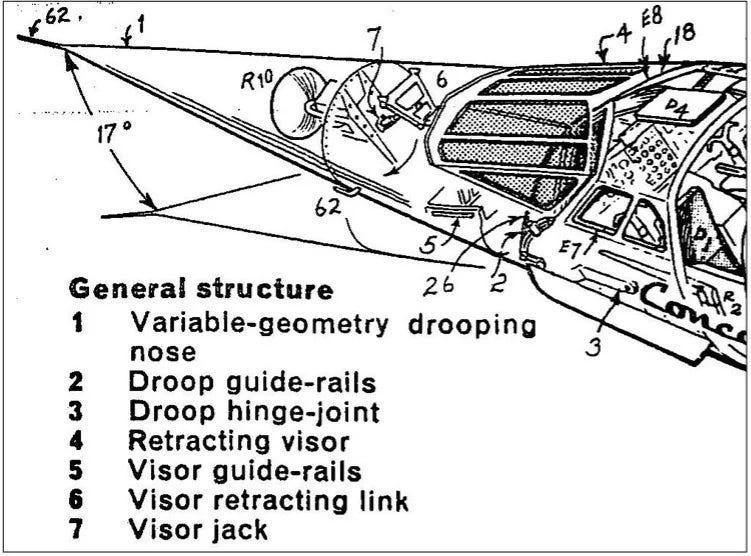
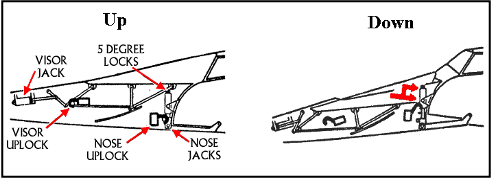
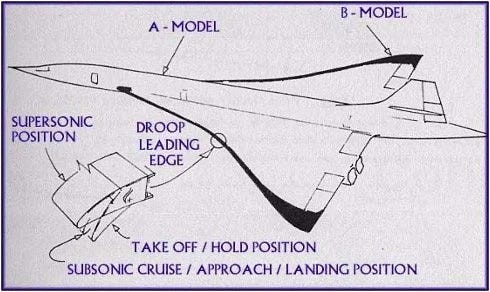
The aircraft’s distinctive droop-nose (for better visibility during landing) and elegant delta wings made it instantly recognizable. Passengers often described the takeoff surge as exhilarating, with the afterburners igniting for that signature acceleration.
Yet the Concorde’s story was bittersweet. Only 20 were built (14 entered commercial service), and high operating costs, fuel consumption, limited routes due to noise and boom regulations, and environmental concerns limited its reach. It remained a premium, niche service for nearly three decades, operated solely by British Airways and Air France. The fleet was retired in 2003 after a tragic crash in 2000 and changing economics.
Today, on the anniversary of that groundbreaking day in 1976, the Concorde stands as a symbol of bold engineering ambition. It proved that humans could routinely travel faster than sound in comfort—something no commercial aircraft has replicated since.
The sonic booms may have faded, but the legend of the Concorde endures as one of aviation’s most iconic achievements.
The Concorde represented a pinnacle of supersonic passenger aviation with its advanced technical design. Its specifications enabled routine transatlantic crossings at over twice the speed of sound.
Physical Dimensions
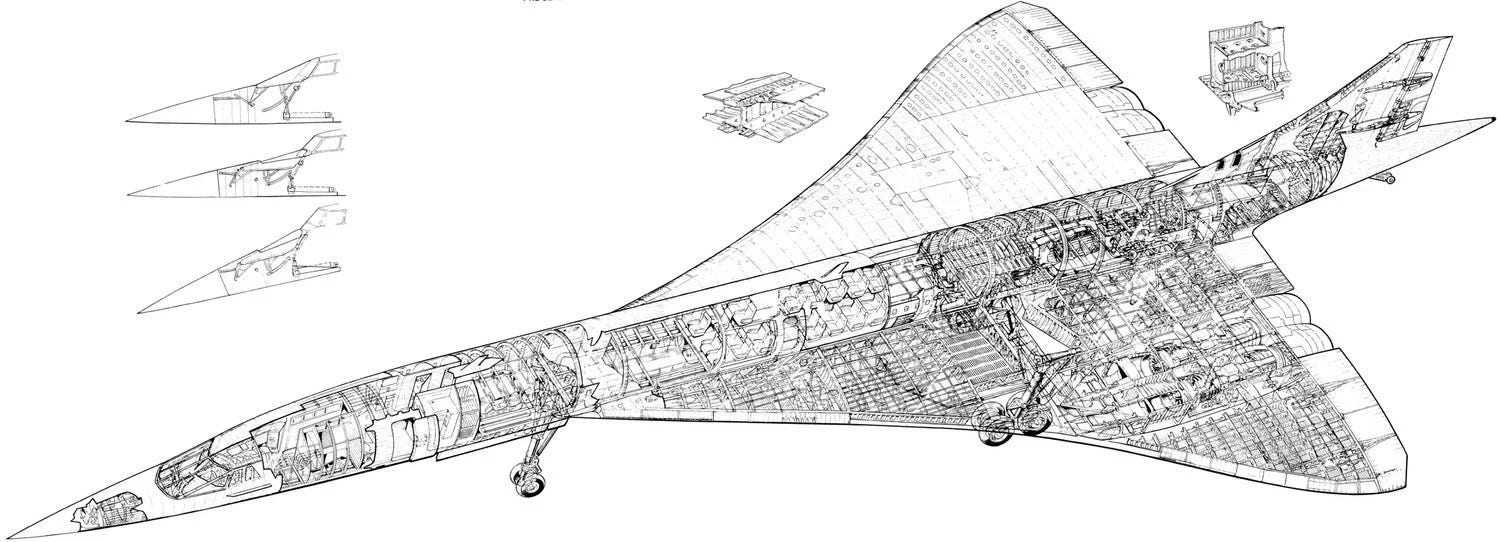
Concorde measured 202 feet 4 inches (61.66 meters) in overall length, with a wingspan of 83 feet 10 inches (25.6 meters) and a height of 40 feet (12.2 meters) from ground to the top of the fin. The ogival delta wing provided a surface area of 3,856 square feet (358.25 square meters), optimised for high-speed stability and low-speed lift through vortex generation. Fuselage width reached 9 feet 5 inches (2.88 meters) externally, accommodating four-abreast seating for 92 to 128 passengers in a narrow cabin.
Propulsion System
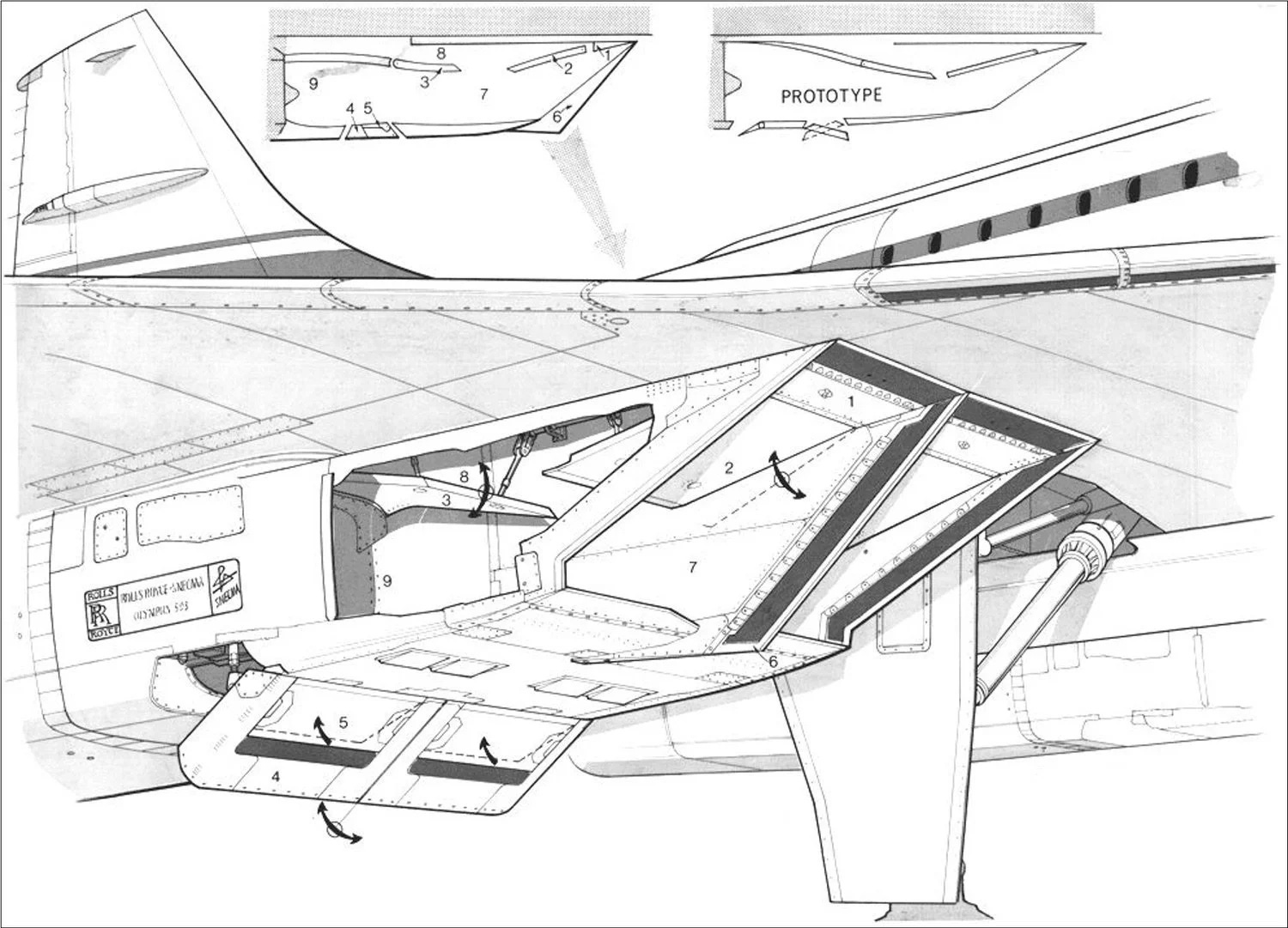
Power came from four Rolls-Royce/Snecma Olympus 593 turbojet engines, each delivering 38,050 pounds of thrust (169 kN) with reheat for takeoff and supersonic acceleration. These featured variable intake ramps, axial-flow compressors (7-stage low and high pressure), and annular combustors to manage airflow at Mach 2. Engines lacked an auxiliary power unit, relying on ground carts at major airports.
Performance Metrics
Cruising at Mach 2.04 (about 1,354 mph or 2,180 km/h) at 60,000 feet, Concorde covered 4,500 miles (7,250 km) with supercruise for 75% of transatlantic routes. Landing speed was 170 mph (274 km/h) at a high angle of attack, with autothrottle managing descent on the backside of the drag curve. Runway tyres supported 250 mph (400 km/h) ground speeds, inflated to 232 psi on main bogies.
Avionics and Controls
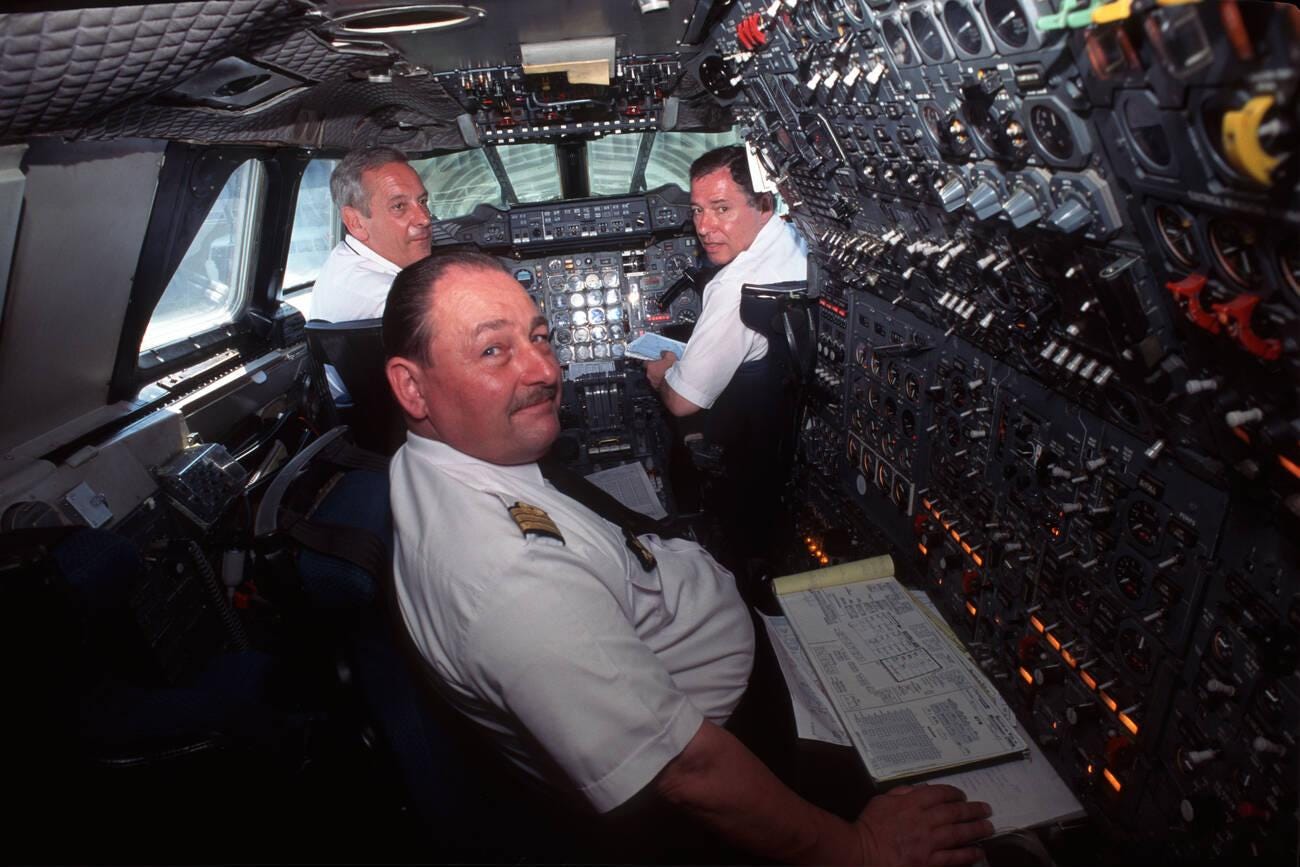
Concorde pioneered analogue fly-by-wire controls and a high-pressure 4,100 psi (28 MPa) hydraulic system for lighter components. An air data computer automated aerodynamic monitoring, while brake-by-wire and electrically controlled systems enhanced precision. The droop nose improved landing visibility, and intake systems included ramps and bleed valves to prevent engine surge above Mach 1.6.
pasajul despre colaborarea franco britanica e superb, mersi, progresul asta european prin cooperare e pur si simplu fascinant